
Stormwater Infiltration — South Al-Mutlaa City, Kuwait
Client: Public Authority for Housing Welfare (PAHW)
Location: Al-Mutlaa Residential City, Kuwait
Scope: Stormwater infiltration and storage systems for the largest housing project in Kuwait
Project Overview
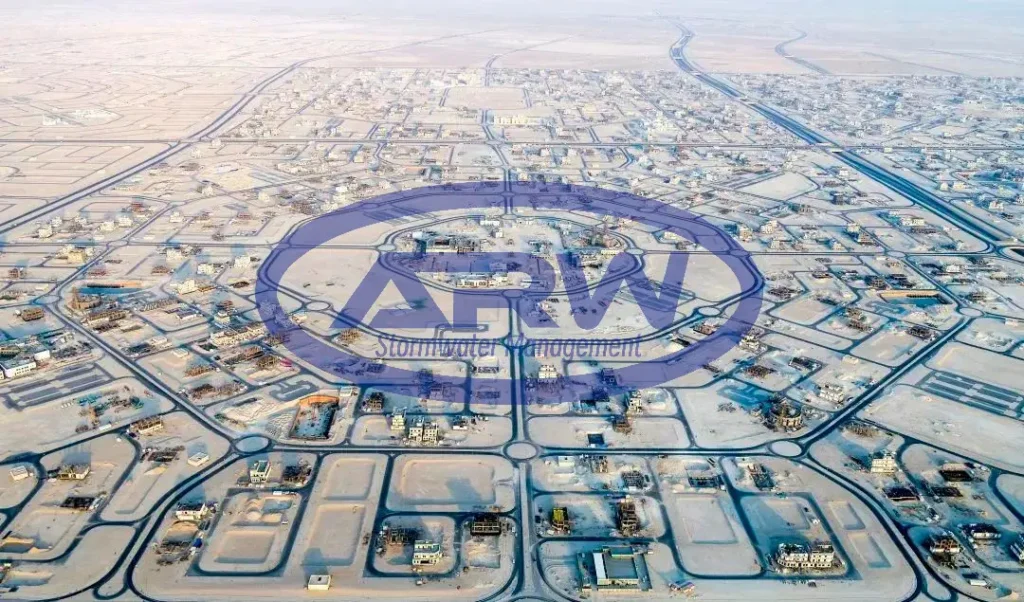
South Al-Mutlaa City is Kuwait’s largest residential development, comprising 28,363 housing units across a 120 km² master-planned area. Implemented in cooperation with international experts, it represents a milestone in Kuwait’s urban expansion and will ultimately house around 400,000 residents.
Infrastructure Highlights
PAHW has completed and handed over the main infrastructure works to the Project Acceptance Committee. Within a 30 km² infrastructure area the works included about 70 million m³ of earthworks, 3,200 km of pipeline networks, 4.6 million m² of asphalt pavement and 650,000 m³ of rainwater infiltration tanks. The total investment exceeds 230 million Kuwaiti dinars, making this the largest housing initiative in the country’s history.
Stormwater Challenge
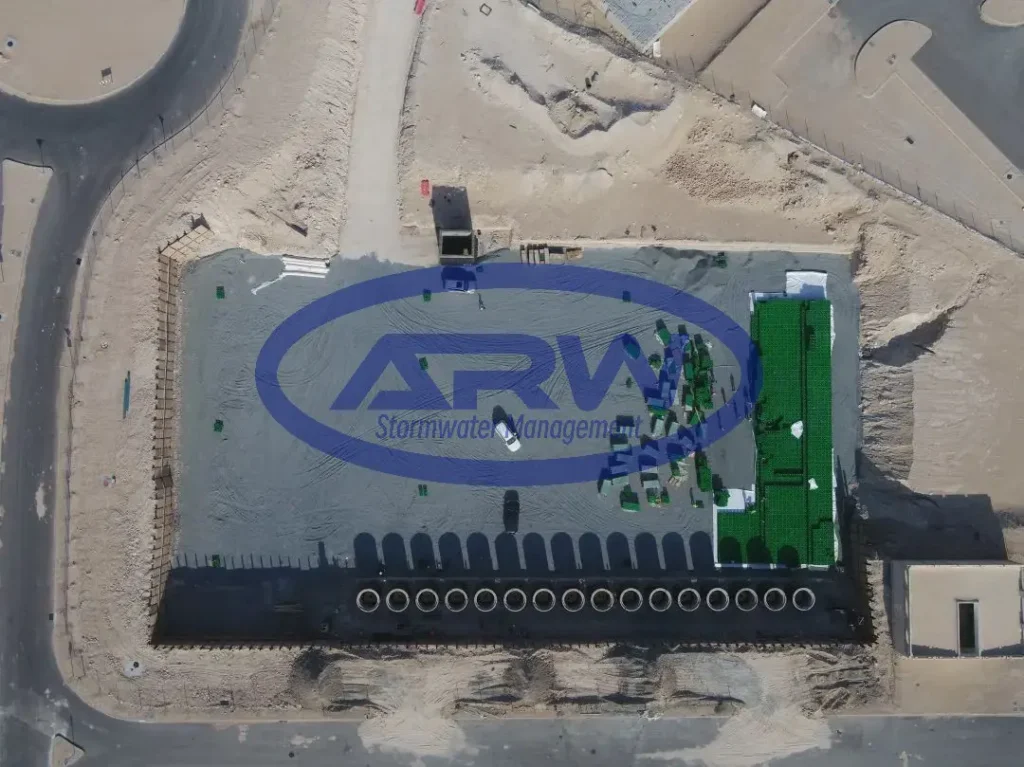
Because of its inland location and compact, low-permeability soils, Al-Mutlaa required infiltration systems able to store roughly one billion litres of stormwater. Most of these systems were built beneath public parks, with some installations buried up to six metres deep to suit the site’s scale and geology.
Our Contribution
We supplied 100,000 m³ of modular geocellular units for the underground infiltration systems. These high-void, lightweight crates were installed over prepared gravel bases and wrapped in geotextile to create stable, easy-to-assemble underground blocks with a low installation height, making optimal use of the available space without disrupting surface amenities.
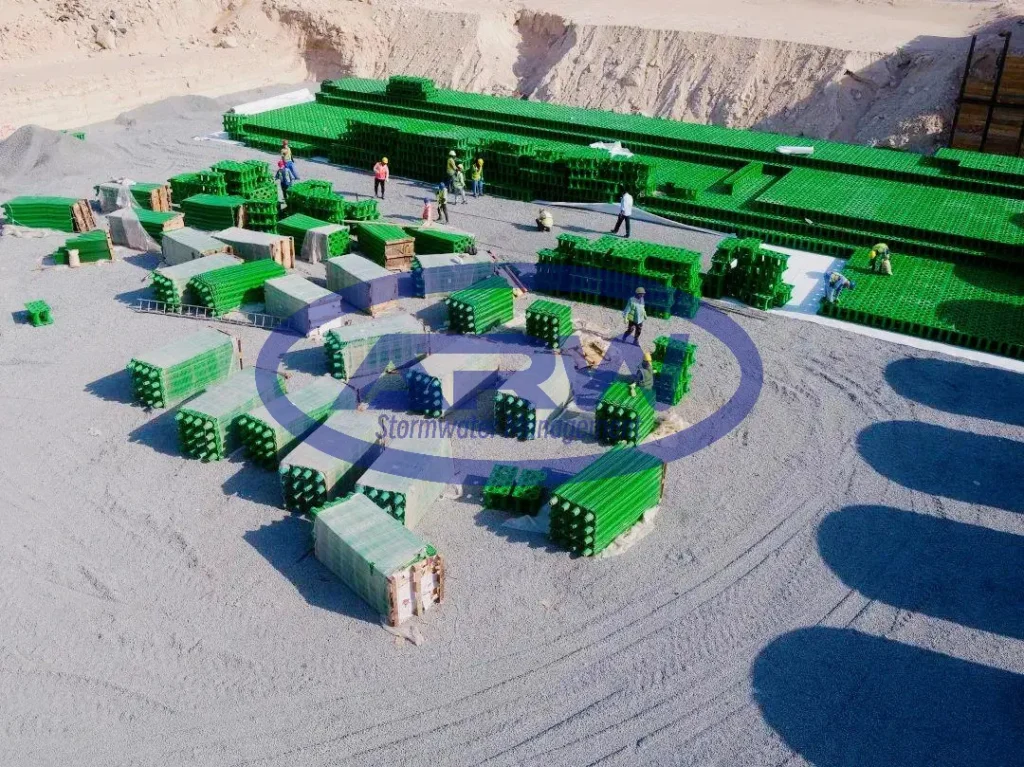
By mid-2022 the final infiltration units were in place. The system now provides South Al-Mutlaa City with sustainable, high-capacity stormwater management, protecting new communities from flooding while preserving valuable surface land for parks, roads and public facilities.